.png)
AI Penetration Testing vs Traditional Penetration Testing: What's the Difference?
As Cyber Threats Evolve, Security Testing Must Evolve Too
 ITSEC Asia
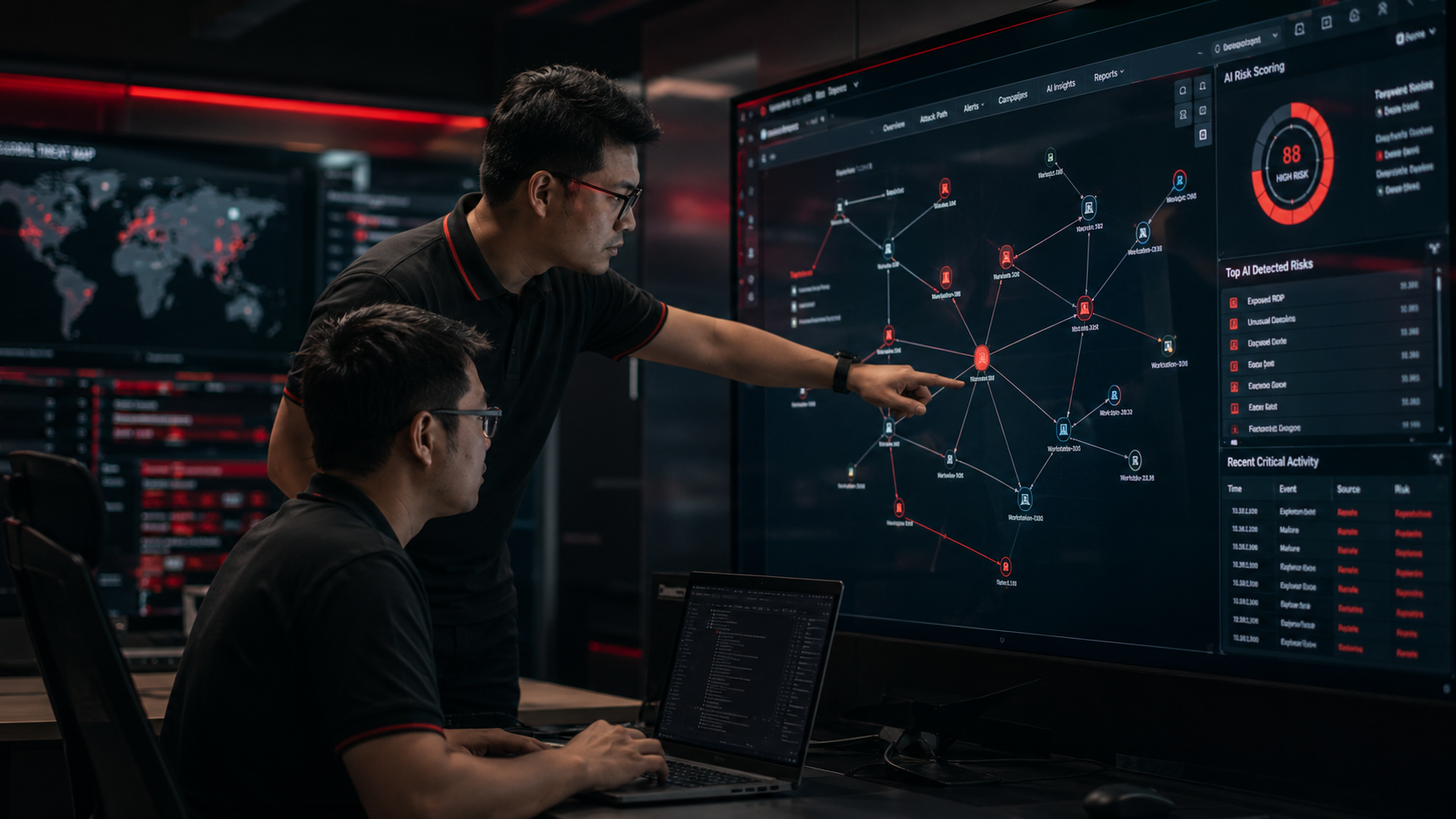
Organizations today face an increasingly complex threat landscape. New vulnerabilities emerge daily, attack surfaces expand continuously and attackers are leveraging automation to move faster than ever before.
For many years, traditional penetration testing has been an essential part of cybersecurity programs. However, as environments become more dynamic, many organizations are exploring how artificial intelligence can enhance security assessments and provide more continuous visibility.
This shift has given rise to AI penetration testing.
But how does AI powered penetration testing compare to traditional penetration testing? Is AI replacing ethical hackers, or are the two approaches designed to work together?
Understanding Traditional Penetration Testing
Traditional penetration testing involves security professionals simulating real world attacks to identify vulnerabilities and weaknesses before attackers can exploit them.
How Traditional Penetration Testing Works
A typical penetration testing engagement may include:
- Reconnaissance and information gathering.
- Vulnerability identification.
- Exploitation and attack path analysis.
- Privilege escalation testing.
- Manual validation of findings.
- Reporting and remediation recommendations.
Traditional penetration testing provides deep insights into an organization's security posture and remains one of the most effective ways to evaluate defenses from an attacker's perspective.
Strengths of Traditional Penetration Testing
Human expertise brings several advantages:
- Creative thinking and attacker mindset.
- Business logic testing.
- Complex attack chain analysis.
- Contextual understanding of risks.
- Manual verification that reduces false positives.
Experienced ethical hackers can often identify weaknesses that automated tools alone may overlook.
Limitations of Traditional Penetration Testing
Despite its strengths, traditional penetration testing is usually performed periodically.
Most organizations conduct assessments annually or quarterly. Once the engagement is completed, however, environments continue to change:
- New applications are deployed.
- Cloud infrastructure evolves.
- Configurations are modified.
- New vulnerabilities emerge.
This creates visibility gaps between assessments.
What Is AI Penetration Testing?
AI penetration testing refers to the use of artificial intelligence and automation to continuously discover, validate and analyze security weaknesses.
Instead of relying solely on point in time assessments, AI powered platforms help organizations gain ongoing visibility into their changing environments.
Key Capabilities of AI Penetration Testing
AI driven systems can provide:
- Automated attack surface discovery.
- Continuous security validation.
- Intelligent prioritization of findings.
- Faster assessment cycles.
- Reduction of false positives.
- Audit ready reporting.
- Improved scalability across large environments.
These capabilities help security teams focus on remediation and strategic decision making rather than repetitive manual tasks.
AI Penetration Testing vs Traditional Penetration Testing
Although both approaches aim to identify vulnerabilities, they differ in several important ways.
Frequency
Traditional penetration testing is performed periodically.
AI penetration testing enables continuous validation.
Speed
Traditional assessments require significant manual effort.
AI driven systems can perform many tasks faster and at scale.
Human Creativity
Human testers excel at thinking like attackers and uncovering complex attack scenarios.
AI is effective at processing large amounts of information but has limitations when dealing with business context and creative exploitation.
Coverage
Traditional penetration testing provides a snapshot of security at a specific moment.
AI powered approaches provide continuous visibility as environments evolve.
Reporting and Visibility
Traditional penetration tests typically generate reports after each engagement.
AI driven platforms provide ongoing visibility and more frequent insights.
Why Human + AI Is the Future of Offensive Security
The debate should not be AI versus humans.
The future of offensive security lies in combining the strengths of both.
What AI Does Best
Artificial intelligence provides:
- Speed.
- Scale.
- Automation.
- Continuous monitoring.
- Efficient prioritization.
What Humans Do Best
Security professionals provide:
- Creativity.
- Contextual understanding.
- Business logic analysis.
- Strategic decision making.
- Advanced attack simulations.
Together, Human + AI enables organizations to achieve stronger and more sustainable security outcomes.
Why Continuous Security Validation Matters
Cyber threats do not operate on annual schedules.
Attackers continuously search for weaknesses. Organizations therefore need a security approach that provides ongoing assurance rather than periodic snapshots.
Continuous Security Validation helps organizations:
- Identify new attack paths.
- Validate security controls continuously.
- Reduce exposure windows.
- Improve remediation prioritization.
- Strengthen cyber resilience.
This is where AI powered platforms complement traditional penetration testing rather than replace it.
Choosing the Right Approach for Your Organization
Traditional penetration testing remains essential for deep assessments and complex attack scenarios.
AI powered penetration testing introduces continuous visibility and operational efficiency.
Organizations that combine both approaches are better positioned to adapt to evolving threats and maintain a stronger security posture.
Conclusion
AI penetration testing and traditional penetration testing should not be viewed as competing approaches.
Human expertise remains irreplaceable. AI enhances speed, scale and continuous validation.
The future of offensive security is Human + AI working together to provide greater visibility, stronger resilience and better security outcomes.
Explore Bronyx
Bronyx is an AI powered autonomous penetration testing platform developed by ITSEC Asia. Built around a Human + AI approach, Bronyx enables organizations to continuously validate their security posture, reduce blind spots and gain audit ready visibility across evolving environments.
Whether you need continuous security validation or a more sustainable approach to offensive security, Bronyx helps security teams gain greater confidence in their cyber resilience.
👉 Learn more about Bronyx: https://bronyx.ai
Need Expert-Led Penetration Testing Services?
While AI provides speed and continuous validation, experienced cybersecurity professionals remain essential for complex attack scenarios, business logic testing and advanced security assessments.
ITSEC Asia is a CREST-accredited cybersecurity company trusted by enterprises and government organizations across Southeast Asia. Our experts deliver penetration testing, red teaming, vulnerability assessments and cybersecurity consulting services designed to help organizations strengthen their security posture.
👉 Explore ITSEC Asia's cybersecurity services: https://itsec.asia