.png)
What Is Continuous Security Validation and Why Does It Matter?
Security Is No Longer a Point-in-Time Exercise
 ITSEC Asia
Cyber threats evolve continuously.
New vulnerabilities are discovered every day. Cloud environments change rapidly. Applications are updated frequently. Employees adopt new technologies and attackers constantly search for opportunities to exploit weaknesses.
Yet many organizations still rely on periodic security assessments conducted once or twice a year.
The challenge is simple: risk does not wait for the next penetration test.
This is why more organizations are embracing Continuous Security Validation (CSV) as part of a modern cybersecurity strategy.
What Is Continuous Security Validation?
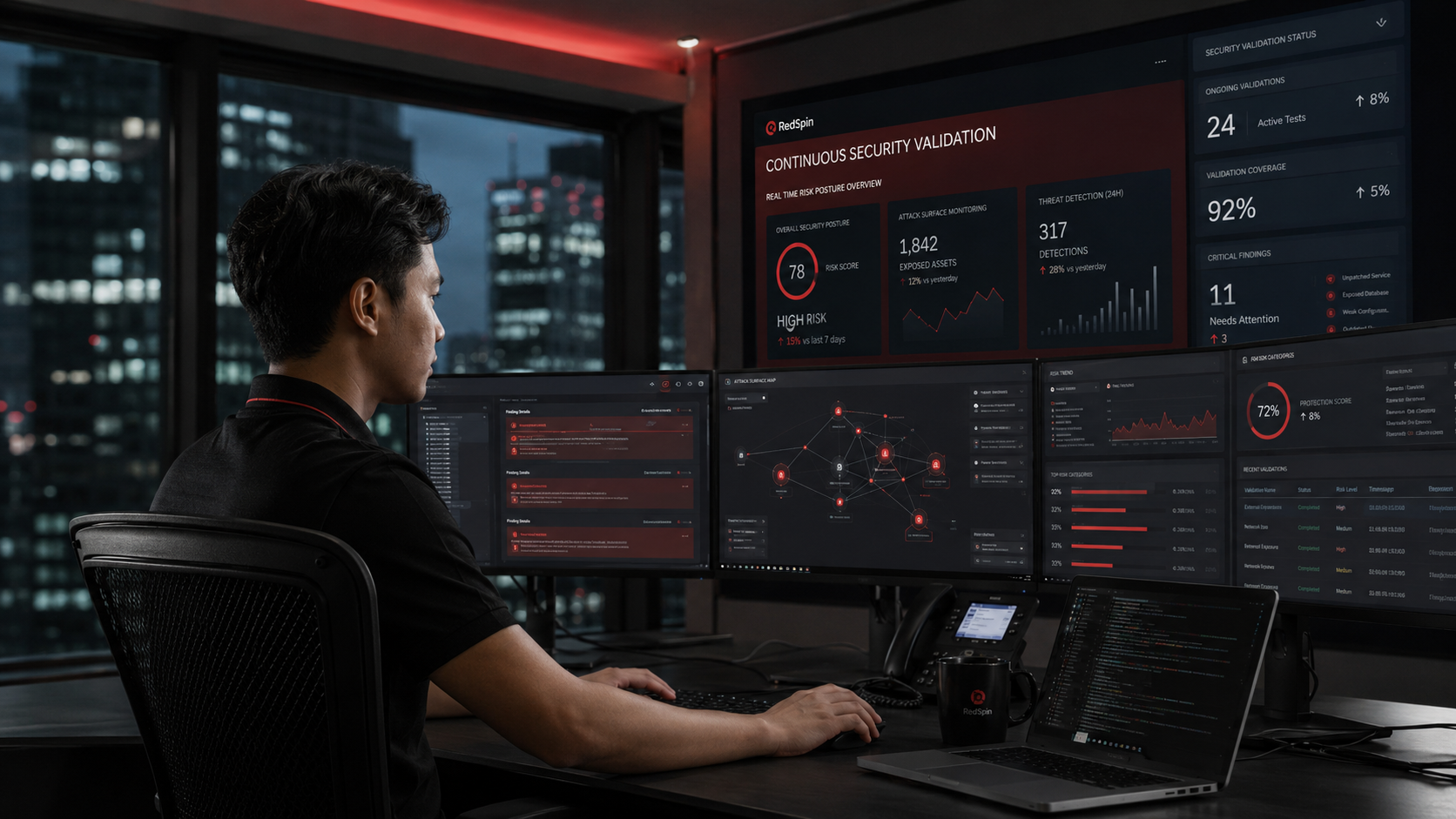
Continuous Security Validation is the practice of continuously evaluating and validating an organization's security posture as environments, threats and attack surfaces evolve.
Instead of providing a snapshot at a single point in time, Continuous Security Validation delivers ongoing visibility into security weaknesses and control effectiveness.
Its purpose is to answer a critical question:
"Are our defenses still working today?"
Rather than waiting months between assessments, organizations gain a more dynamic understanding of their exposure.
Why Traditional Assessments Are No Longer Enough
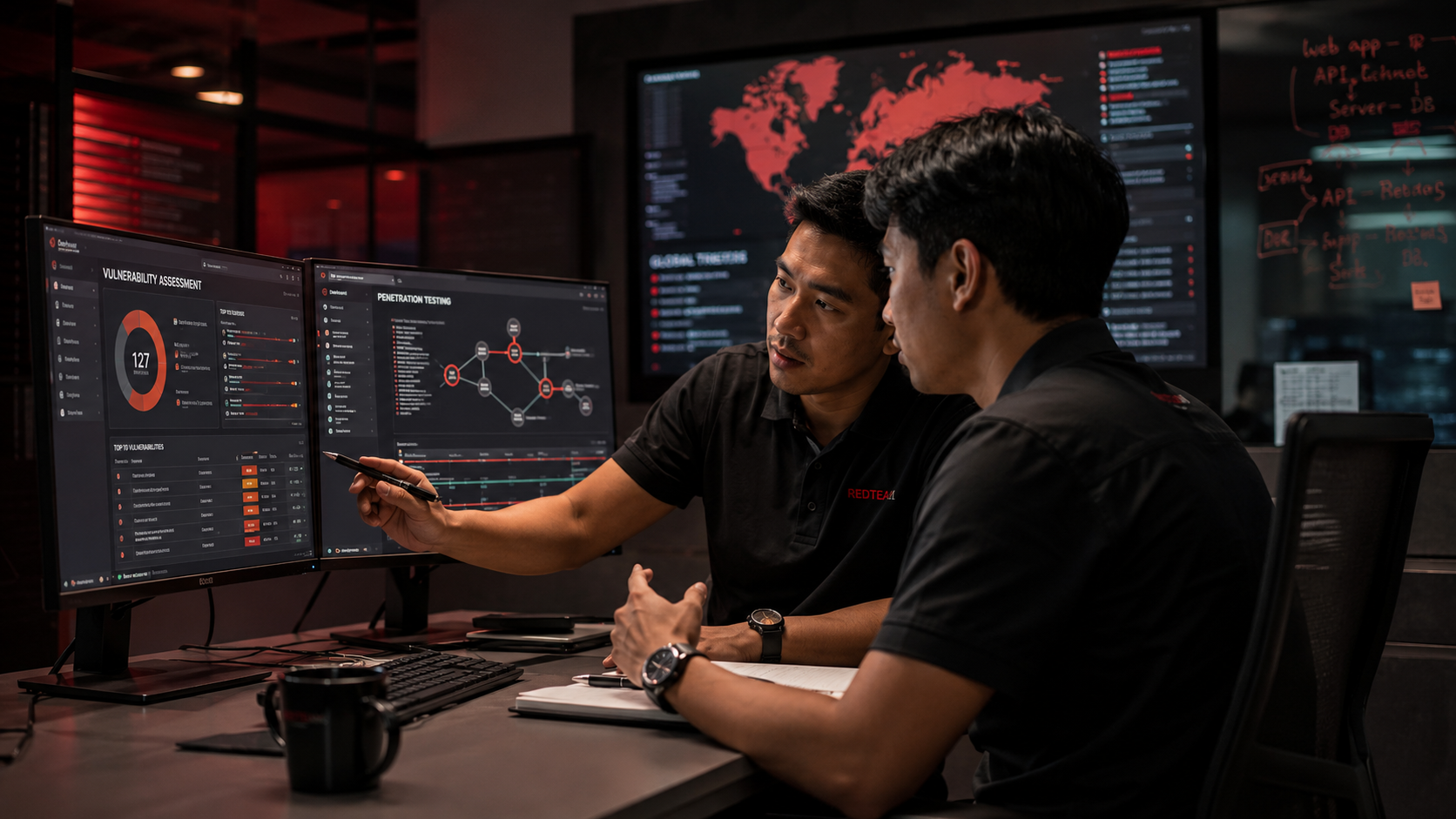
Traditional penetration testing remains an important component of cybersecurity.
However, most assessments are performed periodically.
Between engagements, organizations continue to:
- Deploy new applications.
- Modify configurations.
- Expand cloud environments.
- Integrate third-party services.
- Introduce new APIs.
- Face newly disclosed vulnerabilities.
As a result, security posture can change significantly long before the next scheduled assessment.
This creates blind spots that attackers may exploit.
How Continuous Security Validation Works
Continuous Security Validation helps organizations maintain visibility by continuously identifying and validating potential risks.
Continuous Attack Surface Visibility
As environments evolve, new assets and potential attack paths emerge.
Continuous validation helps organizations maintain awareness of these changes before attackers discover them.
Ongoing Risk Validation
Not all vulnerabilities pose the same level of risk.
Continuous Security Validation focuses on identifying which weaknesses may have the greatest impact and should be prioritized for remediation.
Faster Response to Emerging Threats
Threat landscapes change rapidly.
Continuous validation enables organizations to identify and address newly introduced risks much sooner than traditional assessment cycles.
Improved Security Confidence
Rather than relying on assumptions, organizations can continuously verify whether security controls remain effective over time.
Benefits of Continuous Security Validation
Organizations adopting Continuous Security Validation can achieve several advantages.
Better Visibility
Continuous assessments provide a more current view of the security posture.
Reduced Exposure Windows
Potential weaknesses can be identified and addressed faster.
Improved Prioritization
Security teams can focus on the risks that matter most.
Stronger Cyber Resilience
Ongoing validation helps organizations adapt to changing threats and evolving attack surfaces.
Greater Audit Readiness
Continuous evidence and reporting can support regulatory and compliance requirements.
Continuous Security Validation vs Penetration Testing
A common misconception is that Continuous Security Validation replaces penetration testing.
In reality, the two approaches complement each other.
Penetration Testing
Traditional penetration testing provides:
- Deep manual analysis.
- Human creativity.
- Business logic testing.
- Real-world attack simulations.
Continuous Security Validation
Continuous Security Validation provides:
- Ongoing visibility.
- Faster feedback loops.
- Continuous risk validation.
- More proactive security operations.
Organizations that combine both approaches can achieve stronger security outcomes.
Human + AI: The Next Evolution of Offensive Security
The future of cybersecurity is not Human versus AI.
AI brings speed, scale and automation.
Humans bring expertise, creativity and contextual understanding.
Together, Human + AI enables organizations to:
- Validate risks continuously.
- Reduce blind spots.
- Improve efficiency.
- Strengthen cyber resilience.
- Make better security decisions.
This collaborative approach represents the next evolution of offensive security.
Why Continuous Validation Is Becoming Essential
Attackers do not operate once a year.
Neither should security validation.
As organizations accelerate digital transformation and adopt increasingly dynamic environments, maintaining continuous visibility becomes critical.
Continuous Security Validation helps bridge the gap between periodic assessments and the constantly changing reality of cyber risk.
For many organizations, it represents a shift from reactive security to proactive resilience.
Conclusion
Cybersecurity is no longer a one-time project.
It is an ongoing process.
Traditional penetration testing remains essential, but point-in-time assessments alone may not provide sufficient visibility in today's threat landscape.
Continuous Security Validation enables organizations to continuously verify their defenses, prioritize remediation efforts and strengthen cyber resilience as their environments evolve.
The goal is not simply to identify vulnerabilities.
It is to continuously understand and validate risk.
Explore Bronyx
Bronyx is an AI-powered autonomous penetration testing platform developed by ITSEC Asia. Built around a Human + AI approach, Bronyx enables organizations to continuously validate their security posture, reduce blind spots and gain greater visibility into evolving cyber risks.
By combining intelligent automation with human expertise, Bronyx helps organizations move beyond point-in-time assessments and adopt a more sustainable approach to offensive security.
👉 Learn more about Bronyx: https://bronyx.ai
Need Expert-Led Penetration Testing Services?
While AI enables continuous validation and improved visibility, experienced cybersecurity professionals remain essential for complex attack scenarios and strategic security assessments.
ITSEC Asia is a CREST-accredited cybersecurity company trusted by enterprises and government organizations across Southeast Asia. Our experts provide:
- Penetration Testing
- Red Team Assessments
- Vulnerability Assessments
- Web Application Security Testing
- API Security Testing
- Cybersecurity Consulting
Whether you require periodic assessments or a more comprehensive security strategy, ITSEC Asia can help strengthen your cyber resilience.
👉 Explore ITSEC Asia's cybersecurity services: https://itsec.asia