.png)
Human + AI: Why the Future of Offensive Security Isn't Human vs Machine
Moving Beyond the Human vs AI Debate
 ITSEC Asia
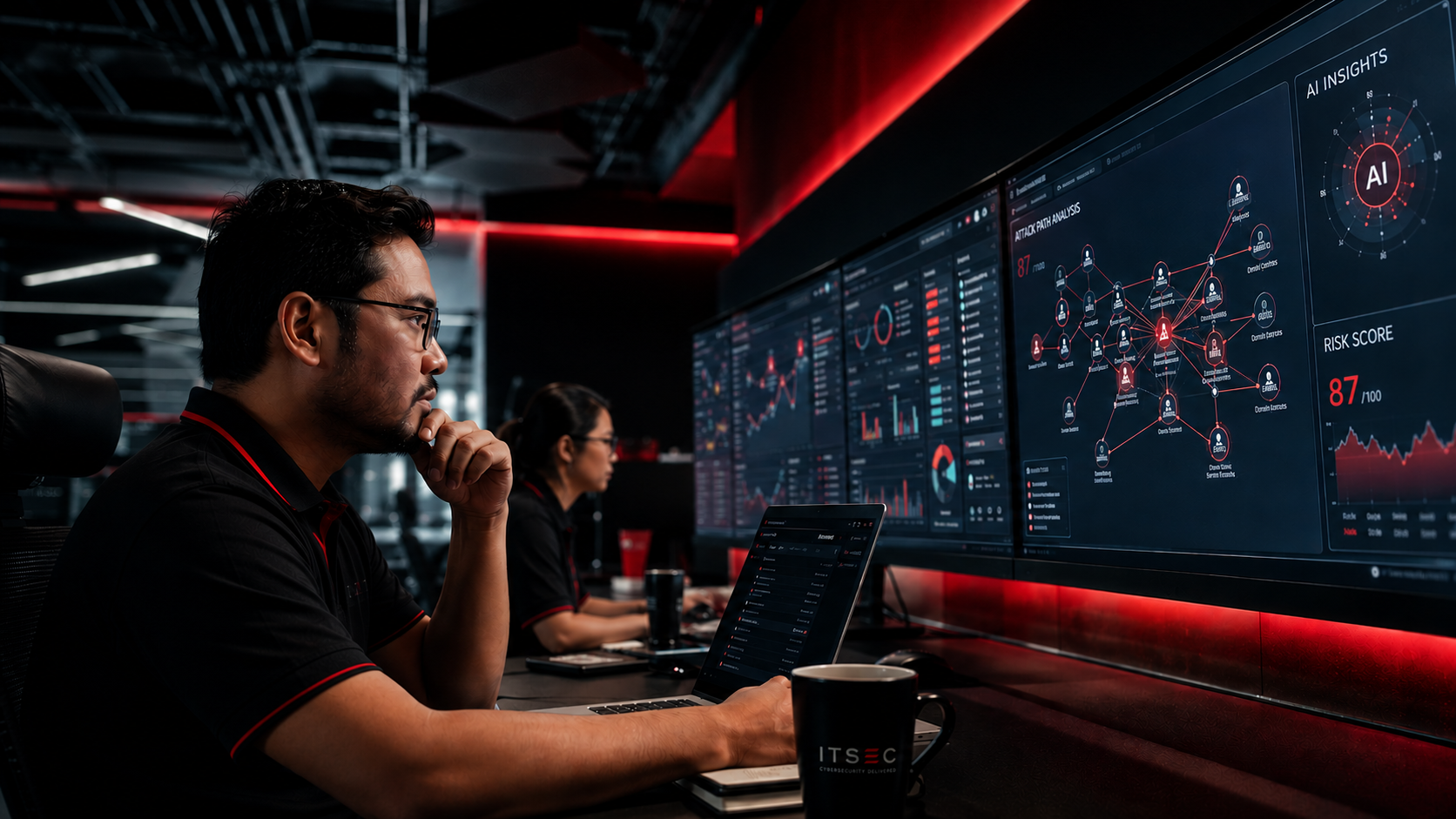
Artificial intelligence is transforming cybersecurity.
From threat detection and vulnerability management to attack simulations and security operations, AI is enabling organizations to process information faster and automate tasks that once required significant manual effort.
As AI adoption accelerates, a common question continues to emerge:
Will AI replace cybersecurity professionals?
The short answer is no.
In reality, the future of offensive security is not about humans competing against machines. It is about combining the strengths of both to create a more effective and sustainable approach to cybersecurity.
Why Offensive Security Is Becoming More Challenging
Modern environments are more complex than ever.
Organizations are embracing cloud computing, APIs, remote work and AI-driven applications. At the same time, threat actors are leveraging automation and AI to identify and exploit vulnerabilities faster.
Security teams face several challenges:
- Expanding attack surfaces.
- Increasing volumes of vulnerabilities.
- Limited cybersecurity resources.
- Alert fatigue.
- Time-consuming manual processes.
- Growing compliance requirements.
As environments continue to evolve, relying exclusively on traditional approaches becomes increasingly difficult.
This is where AI can help.
What AI Does Best
Artificial intelligence excels at tasks that require speed, scale and repetition.
Processing Large Volumes of Data
AI can analyze information far faster than humans and identify patterns that might otherwise go unnoticed.
Continuous Security Validation
AI-powered platforms can continuously evaluate changing environments and provide ongoing visibility into emerging risks.
Automation of Repetitive Tasks
Many security activities involve repetitive work.
AI can help automate:
- Asset discovery.
- Risk prioritization.
- Vulnerability validation.
- Reporting.
- Data analysis.
This allows security teams to focus their time and expertise where it matters most.
Faster Insights
AI enables organizations to respond more quickly by reducing the time required to process findings and prioritize remediation efforts.
What Humans Do Best
While AI offers speed and efficiency, human expertise remains irreplaceable.
Thinking Like an Attacker
Experienced penetration testers bring creativity and intuition that machines cannot easily replicate.
They understand how vulnerabilities can be chained together and how attackers exploit business processes rather than simply technical weaknesses.
Understanding Business Context
Not every vulnerability carries the same level of risk.
Human experts can evaluate findings within the context of:
- Business objectives.
- Regulatory requirements.
- Operational impact.
- Risk appetite.
Complex Attack Scenarios
Business logic flaws and sophisticated attack paths often require human analysis and experience.
These scenarios remain difficult to detect through automation alone.
Strategic Decision Making
AI can provide recommendations.
Humans provide judgment.
Ultimately, cybersecurity decisions require balancing risks, priorities and business realities.
Human + AI Delivers Better Outcomes
Rather than competing with each other, humans and AI complement one another.
AI provides:
- Speed.
- Scale.
- Consistency.
- Continuous visibility.
Humans provide:
- Creativity.
- Context.
- Experience.
- Strategic thinking.
Together, Human + AI enables organizations to:
- Reduce blind spots.
- Improve security efficiency.
- Accelerate remediation.
- Strengthen cyber resilience.
- Maintain continuous visibility into evolving risks.
This combination creates a stronger security posture than either humans or AI could achieve independently.
Why Human + AI Matters in Offensive Security
Traditional penetration testing remains an essential practice.
However, point-in-time assessments alone may no longer provide sufficient visibility in rapidly changing environments.
Organizations increasingly need:
- Continuous validation.
- Faster feedback loops.
- Greater scalability.
- Improved prioritization.
AI enhances these capabilities, while human expertise ensures that findings are accurate, meaningful and actionable.
The result is a more proactive approach to offensive security.
Human + AI Is Shaping the Future of Cybersecurity
The cybersecurity industry is moving away from isolated assessments and toward continuous assurance.
This shift requires both intelligent automation and experienced professionals.
AI is not replacing penetration testers.
Instead, it is allowing them to operate more efficiently, focus on higher-value activities and deliver deeper insights.
The organizations that successfully combine human expertise with AI-driven capabilities will be better positioned to navigate an increasingly complex threat landscape.
Conclusion
The future of offensive security is not Human versus AI.
It is Human + AI.
Artificial intelligence brings speed, scalability and automation.
Humans bring creativity, experience and strategic thinking.
Together, they create a more resilient and sustainable approach to cybersecurity.
As threats continue to evolve, organizations that embrace this collaborative model will be better equipped to maintain visibility, prioritize risks and strengthen their overall security posture.
Explore Bronyx
Bronyx is an AI-powered autonomous penetration testing platform developed by ITSEC Asia. Built around a Human + AI philosophy, Bronyx combines intelligent automation with human expertise to help organizations continuously validate their security posture and reduce blind spots.
By bringing together the strengths of AI and cybersecurity professionals, Bronyx enables organizations to move beyond traditional point-in-time assessments and adopt a more sustainable approach to offensive security.
👉 Learn more about Bronyx: https://bronyx.ai
Need Expert-Led Penetration Testing Services?
Technology alone is not enough.
Experienced cybersecurity professionals remain essential for validating complex attack scenarios, understanding business context and delivering actionable security insights.
ITSEC Asia is a CREST-accredited cybersecurity company trusted by enterprises and government organizations across Southeast Asia. Our experts provide:
- Penetration Testing
- Red Team Assessments
- Vulnerability Assessments
- Web Application Security Testing
- API Security Testing
- Cybersecurity Consulting
Combining deep expertise with innovative technologies, we help organizations strengthen resilience against evolving cyber threats.
👉 Explore ITSEC Asia's cybersecurity services: https://itsec.asia