Logo
Cybersecurity

Indonesia’s Cybersecurity Talent Problem Is Becoming a Skills Problem

cybersecurity indonesia
cyber security indonesia
cybersecurity di indonesia
cyber security di indonesia
cybersecurity in indonesia
cyber security in indonesia

Hiring more people helps. But if they freeze when the alert turns real, the headcount doesn’t mean much.
ITSEC AsiaITSEC Asia
|
Sep 01, 2026
Indonesia’s Cybersecurity Talent Problem Is Becoming a Skills Problem

Indonesia needs more cybersecurity professionals. That part is obvious. What is becoming less obvious is whether the real problem is still about numbers.

The 2026 SANS | GIAC Cybersecurity Workforce Research Report found that 60% of surveyed organizations said their teams lacked the right skills to defend against current threats. More concerning, 27% reported breaches directly linked to capability gaps.

That changes the conversation. A company can have a security team, a dashboard full of alerts and a stack of expensive tools. The harder question is whether the people behind them know what to do when something unusual happens.

Cybersecurity Work Is Moving Fast

Artificial intelligence is making that question harder.

AI can already help with alert analysis, vulnerability prioritization and repetitive investigation tasks. Attackers can use the same technology to make attacks faster and easier to scale.

In August 2026, Vice Minister of Communication and Digital Affairs Nezar Patria warned that agentic AI could allow cyberattacks to operate with less direct human involvement. He also highlighted threats such as harvest now, decrypt later, where encrypted information stolen today could potentially be decrypted using more advanced computing in the future.

That means knowing how to operate a security tool is becoming the baseline, not the finish line.

Security teams increasingly need people who can:

  • Investigate unusual activity and decide what actually matters
  • Understand attacker behavior instead of trusting every automated alert
  • Work across cloud, endpoint, identity and network environments
  • Use AI-assisted tools without blindly accepting their output
  • Make decisions when an incident doesn’t follow the textbook

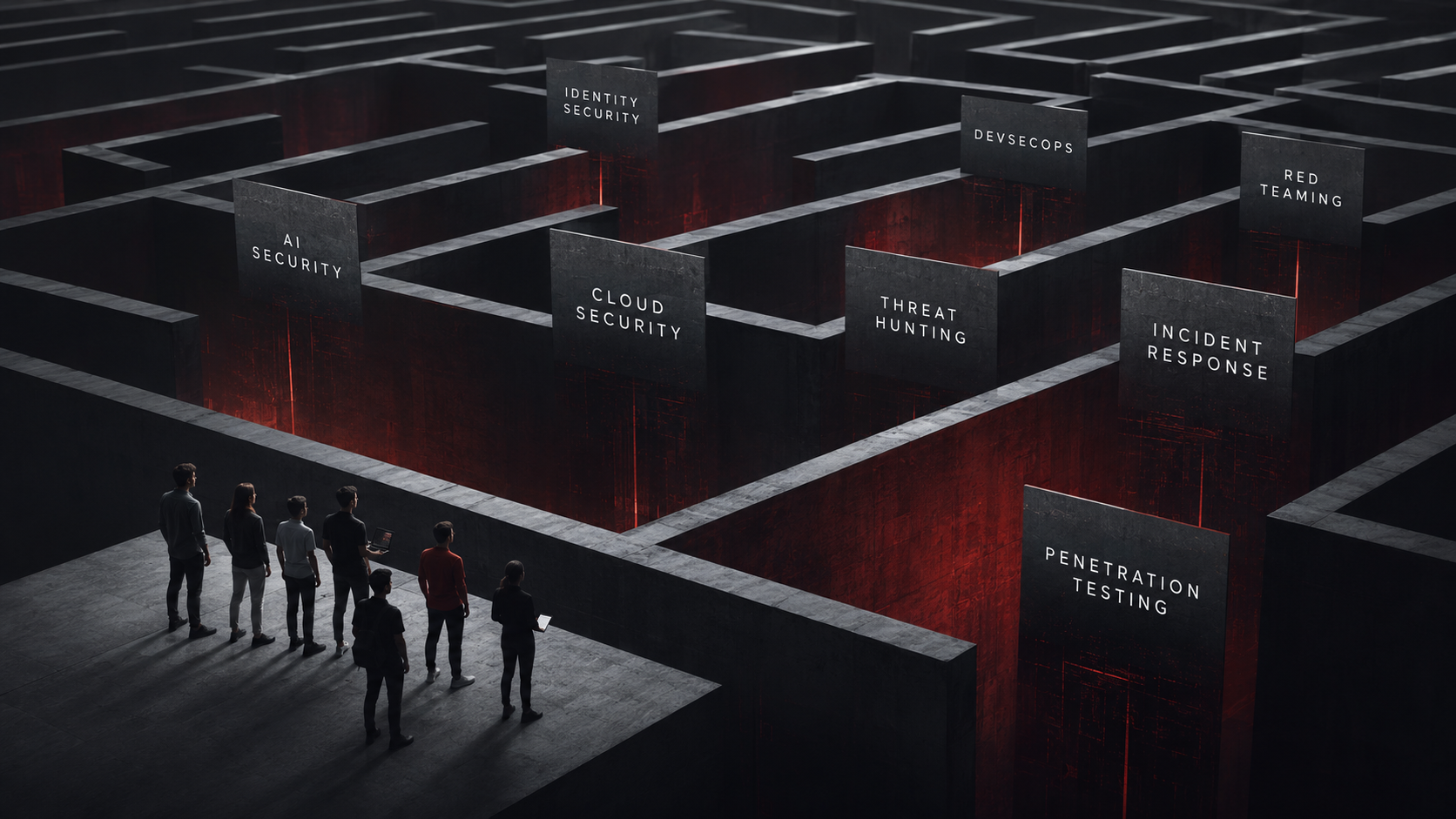
The uncomfortable part is that these skills are difficult to build from slides and theory alone.

AI Is Also Changing How Juniors Learn

Junior cybersecurity professionals have traditionally learned by doing repetitive operational work: reviewing alerts, investigating simpler cases and documenting incidents.

That work may not be glamorous, but it builds judgment.

SANS notes that AI is beginning to automate some of the same entry-level tasks that have historically helped train new cybersecurity professionals. If that trend continues, junior talent may get fewer chances to learn through routine work before they are expected to handle harder problems.

So training has to compensate.

Cyber ranges, simulations and scenario-based exercises can give people something a slide deck cannot: the experience of making a decision when the situation is messy and the answer is not immediately obvious.

Indonesia Needs More Talent. It Also Needs More Ready Talent.

Komdigi estimates that Indonesia will need around nine million digital talents by 2030, while the current supply stands at roughly three million.

Closing that gap matters. But counting course graduates or certifications alone will not tell us whether the workforce is ready.

A stronger measure is capability.

Can someone investigate an alert? Can they recognize suspicious behavior? Can they explain what happened? Can they respond without waiting for someone else to tell them what to do?

This is the gap that ITSEC Cyber & AI Academy is designed to address, combining cybersecurity learning with practical exercises, realistic scenarios and experience drawn from ITSEC Asia’s security operations.

As AI takes over more routine work, human judgment becomes more valuable, not less.

Indonesia needs more cybersecurity talent.

The next challenge is making sure that talent can actually do the job.

Explore practical cybersecurity and AI training at ITSEC Cyber & AI Academy: www.itsec.academy
Share this post

You may also like

AI Is Raising the Bar for Cybersecurity Talent
Cybersecurity

AI Is Raising the Bar for Cybersecurity Talent

For cybersecurity teams, AI is quickly moving from something experimental to something people actually use. The World Economic Forum’s Global Cybersecurity Outlook 2026 found that 77% of surveyed organizations had adopted AI for cybersecurity. It is already being used for tasks such as phishing detection, intrusion response and user-behaviour analysis. That sounds like good news for teams struggling with workload. And mostly, it is. But AI doesn’t remove the need for skilled cybersecurity professionals. It changes what those professionals need to be good at. AUTOMATION CAN DO MORE. SO HUMANS HAVE TO DO MORE TOO. The same WEF research found that 54% of organizations considered insufficient knowledge or skills a barrier to using AI effectively in cybersecurity. Another 41% pointed to the need for human oversight. That second number matters. AI can analyse enormous amounts of information quickly. What it still struggles with is context: whether an unusual event is genuinely dangerous, how a technical issue affects the business and what action makes sense when the available information is incomplete. Cybersecurity professionals increasingly need

ITSEC AsiaITSEC Asia
|
Sep 02, 2026 — 3 minutes read
Employees Want Better Cybersecurity Skills. The Training Has to Keep Up.
Cybersecurity

Employees Want Better Cybersecurity Skills. The Training Has to Keep Up.

Cybersecurity training has an awkward reputation. For many employees, it arrives as an annual module, a collection of familiar warnings and a quiz that strongly encourages remembering whatever appeared on the previous screen. Meanwhile, the workplace has become considerably less predictable. ENISA’s latest Cybersecurity Month data shows that 74% of surveyed employees had received suspicious emails, messages, voice communications or links at work during the previous six months. Phishing remained the most common example, but employees also encountered attempts to steal personal information, passwords, AI-generated scams, malware and ransomware. ENISA [https://www.enisa.europa.eu/news/cybersecurity-month-work-employees-skills-under-the-looking-glass] Yet only 45% said their organization regularly sends cybersecurity awareness information or updates. The interesting part is that employees don’t appear uninterested. Eighty-five percent said they wanted to improve their cybersecurity skills. ENISA [https://www.enisa.europa.eu/news/cybersecurity-month-work-employees-skills-under-the-looking-glass] The gap is partly about how training is delivered. THE BIGGEST TRAINING PROBLEM MAY BE THE CALENDAR Among employees who identified obstacles to developing cyber skills, 26% cited finding time during work, ahead of cost at 16%, followed by limited information about training and insufficient employer support. ENISA [https://www.enisa.europa.eu/news/cybersecurity-month-work-employees-skills-under-the-looking-glass] That matters because

ITSEC AsiaITSEC Asia
|
Okt 02, 2026 — 3 minutes read
Supply Chain Attacks Are Growing: Why Third-Party Risk Needs Continuous Testing
Cybersecurity

Supply Chain Attacks Are Growing: Why Third-Party Risk Needs Continuous Testing

Introduction Third-party involvement in data breaches doubled from 15 percent to 30 percent in a single year, the largest one-year shift ever recorded in the Verizon 2025 Data Breach Investigations Report. That is not a gradual trend line, it is a structural shift in how attackers reach their targets. Rather than breaching a company directly, they go after the vendor, the software dependency, or the service provider sitting quietly inside that company's trust boundary. As Indonesia's leading cybersecurity company, ITSEC Asia works with organizations across finance, healthcare, and technology who are only now realizing that their own defenses were never the whole picture, because a breach can start three vendors away and still land squarely on their desk. Source: Supply Chain Attack Statistics 2026, Stingrai Research · Supply Chain Attack Statistics for 2026, Swif The Numbers Behind the Shift A supply chain compromise now costs an average of 4.91 million US dollars and takes 267 days to identify and contain, the longest lifecycle of any breach vector tracked in IBM's Cost

ITSEC AsiaITSEC Asia
|
Jul 31, 2026 — 4 minutes read

Receive weekly
updates on new posts

Subscribe