.png)
OWASP Top 10 Explained: The Risks Every Organization Should Understand
Why OWASP Top 10 Still Matters
 ITSEC Asia
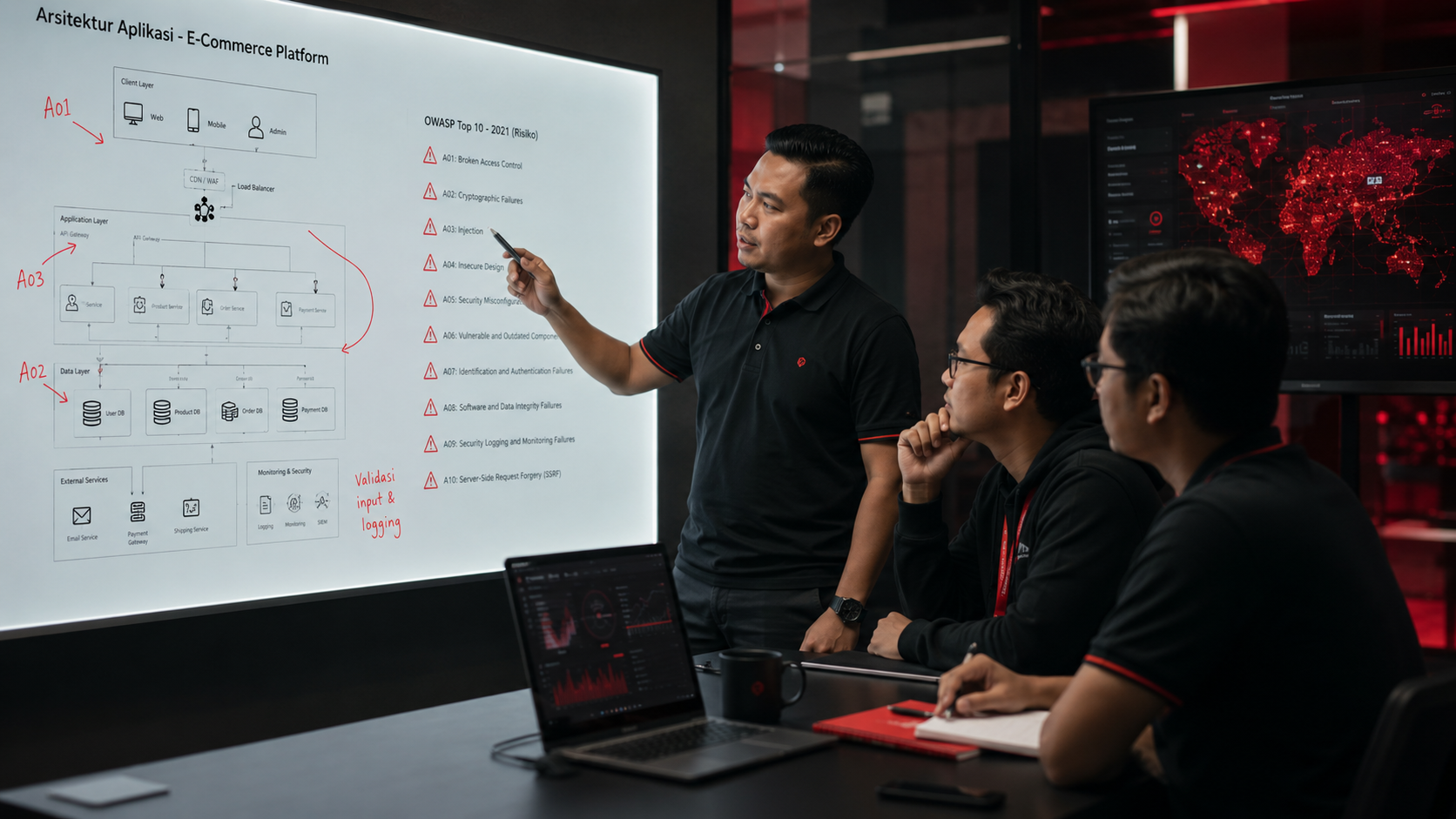
Modern applications have become increasingly interconnected and complex. Organizations rely on web applications, APIs and cloud services to support critical business operations and deliver digital experiences.
Unfortunately, attackers are evolving just as quickly.
As cyber threats continue to grow, understanding common application security risks has become essential. This is where the OWASP Top 10 plays an important role.
Widely regarded as one of the most influential resources in application security, the OWASP Top 10 provides organizations with a practical framework for understanding and prioritizing the most critical risks affecting web applications.
Whether you are a developer, security professional or business leader, understanding these risks is essential for building stronger cyber resilience.
What Is OWASP?
OWASP, or the Open Worldwide Application Security Project, is a global non-profit organization focused on improving software security.
Among its many initiatives, the OWASP Top 10 is perhaps the most widely recognized. It highlights the most significant security risks affecting modern web applications based on industry data and expert consensus.
The list is not intended to be a compliance checklist.
Instead, it serves as a guide to help organizations understand where their biggest risks may lie and how to prioritize security efforts.
Understanding the OWASP Top 10
1. Broken Access Control
Access control determines what users are allowed to see and do.
When these controls are improperly implemented, attackers may gain unauthorized access to data or functionality that should be restricted.
Broken Access Control has become one of the most common findings during penetration testing engagements.
2. Cryptographic Failures
Sensitive information must be adequately protected.
Weak encryption, insecure storage mechanisms and poor key management can expose confidential data to attackers.
3. Injection
Injection vulnerabilities occur when untrusted data is interpreted as commands.
Examples include SQL Injection and command injection.
Despite years of awareness, injection attacks continue to represent a serious threat.
4. Insecure Design
Security should be incorporated throughout the software development lifecycle.
Weak design decisions can introduce risks that become difficult and expensive to fix later.
5. Security Misconfiguration
Misconfigurations remain one of the most common causes of security incidents.
Default settings, unnecessary services and improper permissions often create opportunities for attackers.
6. Vulnerable and Outdated Components
Modern applications depend heavily on third-party libraries and frameworks.
Outdated components may contain publicly known vulnerabilities that attackers can exploit.
7. Identification and Authentication Failures
Weak authentication mechanisms increase the likelihood of unauthorized access and account compromise.
Strong identity controls are critical for protecting users and applications.
8. Software and Data Integrity Failures
Supply chain attacks and compromised software dependencies have highlighted the importance of ensuring software integrity.
Organizations must maintain trust throughout the software development and deployment process.
9. Security Logging and Monitoring Failures
Without proper logging and monitoring, organizations may struggle to detect and respond to attacks in a timely manner.
Visibility is essential for effective incident response.
10. Server-Side Request Forgery (SSRF)
SSRF vulnerabilities allow attackers to manipulate servers into making unintended requests.
These attacks can expose internal systems and sensitive resources.
Why the OWASP Top 10 Matters to Businesses
Application security risks are not just technical issues.
They can result in:
- Data breaches.
- Operational disruptions.
- Financial losses.
- Regulatory consequences.
- Reputational damage.
- Loss of customer trust.
Understanding these risks enables organizations to make better decisions and prioritize security investments more effectively.
How Organizations Can Reduce OWASP Top 10 Risks
There is no single solution that eliminates all application security risks.
However, organizations can significantly improve their security posture through:
Secure Development Practices
Security should be integrated throughout the software development lifecycle rather than treated as an afterthought.
Regular Penetration Testing
Penetration testing helps organizations identify vulnerabilities before attackers do.
It also provides valuable insight into how weaknesses could affect business operations.
API Security Testing
As APIs become increasingly important, organizations must ensure that these interfaces are properly protected.
Continuous Security Validation
Modern environments change constantly.
Continuous validation helps organizations maintain visibility and identify emerging risks between traditional assessments.
Security Awareness
Building a culture of security awareness across development and operations teams can significantly reduce risk.
Human + AI: Strengthening Application Security
Artificial Intelligence is changing the way organizations approach offensive security.
AI enables:
- Faster analysis.
- Better prioritization.
- Greater scalability.
- Continuous visibility.
Human experts provide:
- Creativity.
- Contextual understanding.
- Business logic analysis.
- Strategic guidance.
Together, Human + AI help organizations strengthen their defenses against evolving threats.
Conclusion
The OWASP Top 10 provides organizations with a valuable framework for understanding the most critical application security risks.
While the list itself does not guarantee security, it serves as a foundation for improving application resilience and prioritizing security efforts.
By combining secure development practices, expert-led assessments and Continuous Security Validation, organizations can better protect their applications and reduce exposure to cyber threats.
Explore Bronyx
Bronyx is an AI-powered autonomous penetration testing platform developed by ITSEC Asia. Built around a Human + AI philosophy, Bronyx helps organizations continuously validate their security posture, reduce blind spots and gain greater visibility into evolving cyber risks.
By combining intelligent automation with human expertise, Bronyx enables organizations to move beyond point-in-time assessments and adopt a more sustainable approach to offensive security.
👉 Learn more about Bronyx: https://bronyx.ai
Need Application Security Testing Services?
Understanding the OWASP Top 10 is only the beginning.
Experienced cybersecurity professionals remain essential for identifying complex attack paths, business logic flaws and vulnerabilities that automated tools may miss.
ITSEC Asia is a CREST-accredited cybersecurity company trusted by enterprises and government organizations across Southeast Asia. Our experts provide:
- Web Application Penetration Testing
- API Security Testing
- Vulnerability Assessments
- Red Team Assessments
- Cybersecurity Consulting
Whether you are developing customer-facing applications or strengthening your software security program, ITSEC Asia can help improve your cyber resilience.
👉 Explore ITSEC Asia's cybersecurity services: https://itsec.asia